

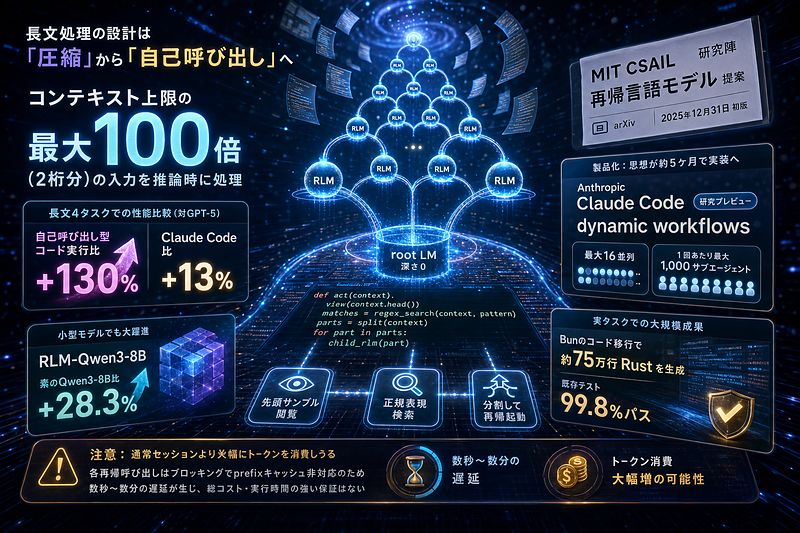
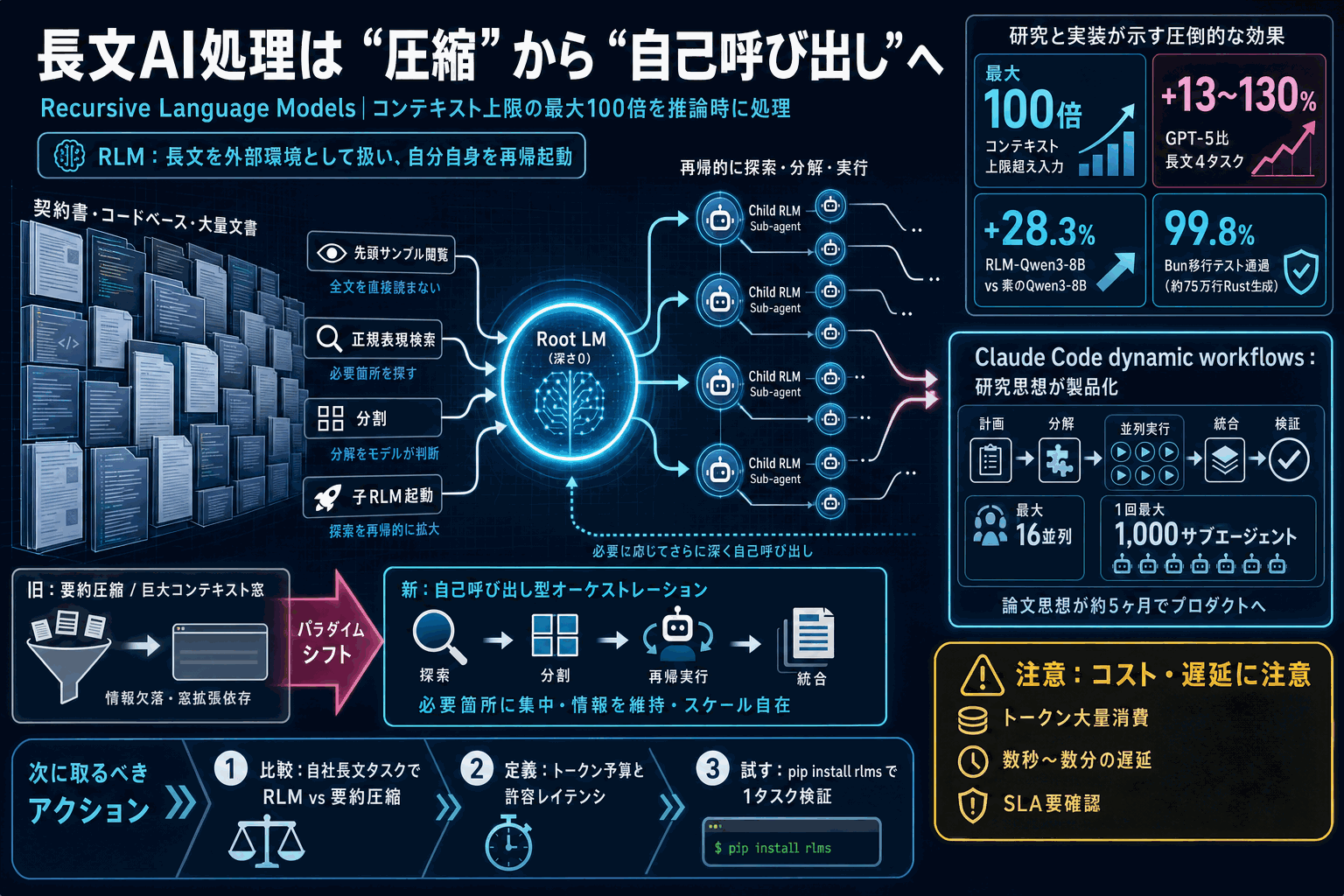
MIT CSAILのAlex L. Zhang・Tim Kraska・Omar Khattabが発表した再帰言語モデル(RLM)は、長いプロンプトを「外部環境」として扱い、最上位のモデルが全文を直接読まずに、コードを書いて分割・検索し、子RLMを再帰的に呼び出す推論手法。ネイティブのコンテキストウィンドウを最大100倍(2桁)超える入力を処理できる。論文は2025年12月31日初版、v3が2026年5月11日。
ベンチマークでは対GPT-5の長文4タスクで、要約圧縮比+26%・自己呼び出し型コード実行比+130%・Claude Code比+13%(中央値)。OOLONG(13.2万トークン)ではRLM(GPT-5-mini)がGPT-5を約114%上回りAPIコスト同等。小型のRLM-Qwen3-8Bは素のQwen3-8B比+28.3%。
Anthropicは2026年5月28日、Claude Codeにdynamic workflows(研究プレビュー)を公開。最大16並列・最大1,000サブエージェントを起動し敵対的レビューで検証する仕組みで、論文の思想を製品化した。第一著者本人がOpus 4.8+dynamic workflowsを「初のRLM訓練事例」と公言している。






We've raised $65 billion in Series H funding at a $965 billion post-money valuation, led by @AltimeterCap, Dragoneer, @Greenoaks, and @sequoia. This investment will help us advance our research and expand our capacity to meet growing demand for Claude.
Earlier this month, our run-rate revenue crossed $47 billion. This growth has been driven by organizations across many industries deploying Claude in their core operations, and by a growing number of people using it for their everyday work. Read more:
Also new in Claude Code: dynamic workflows (research preview). For the hardest tasks, Claude makes a plan, runs hundreds of parallel subagents, and verifies its work before reporting back. Think a migration touching hundreds of files. Read more:
In Claude Code, Opus 4.8 makes calls like an experienced engineer without needing constant check-ins. It stays on track across long-running sessions and follows work through in your repo, so you can hand off a feature or a bug sweep while you focus on what's next.