

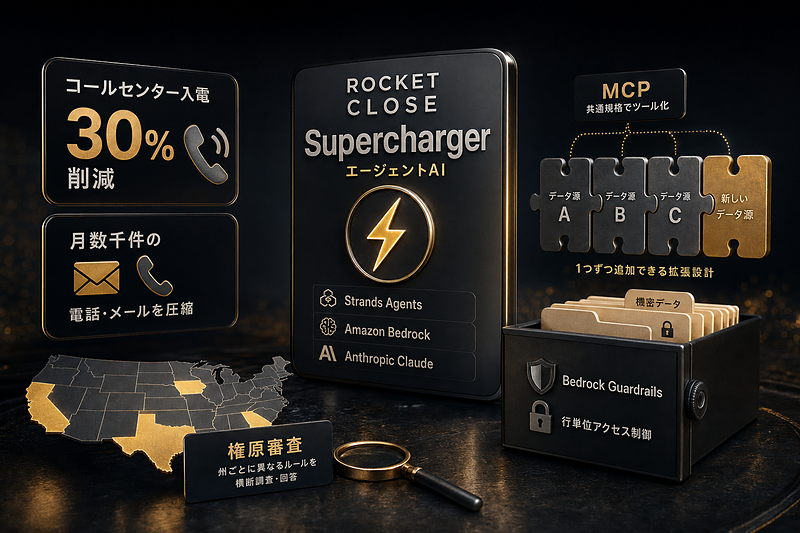
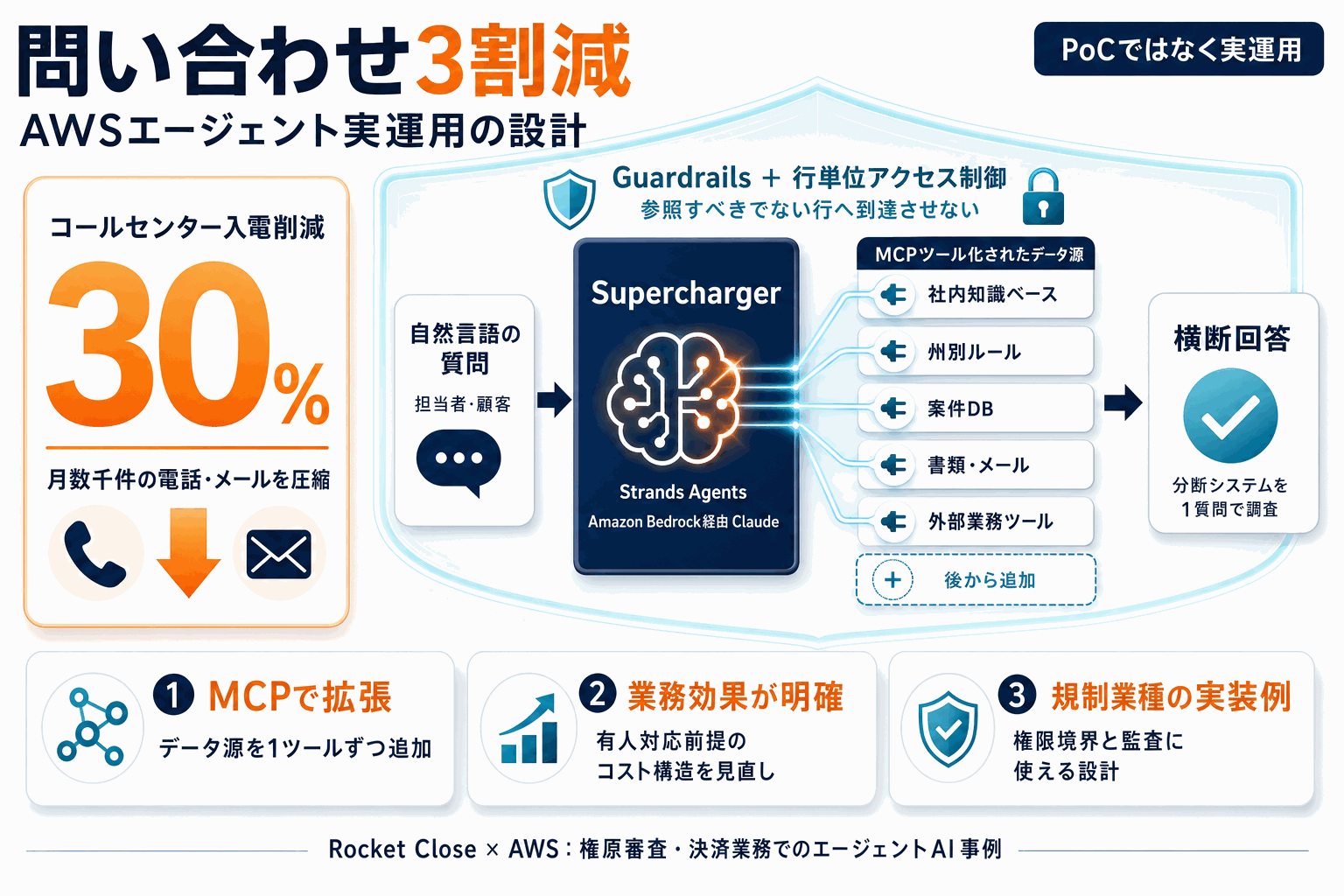
米国の不動産権原・評価・決済サービス企業Rocket Closeが、AWSと組んでエージェント型AI「Supercharger」を実運用し、コールセンターへの電話・メールを月数千件、入電を30%削減したとAWS公式ブログで公表した。州ごとに異なる権原審査や郡ごとの登記要件など、担当者が複数システムを横断していた調べ物を、自然言語の質問1本で支援する。
基盤はAWSのオープンソース開発キットStrands Agentsで、大規模言語モデルはAmazon Bedrock経由でAnthropic Claudeを使う。設計の核は、各データ源をAIと外部ツールをつなぐ共通規格(MCP)で個別のツールとして公開し、エージェントが質問に応じて動的に選ぶ点にある。新しいデータ源を後から足せる拡張性の高い構成だ。
機密データ保護のため、Bedrockの安全機能Guardrailsと行単位のアクセス制御を組み合わせ、誤アクセスを防いだ。監査や権限境界を意識した設計は、規制業種でエージェント導入を検討する企業の参考になる。







AI agents are powerful, but they don’t remember your preferences. So you end up repeating instructions- How you structure projects. Your brand guidelines. You can now teach Replit Agent your conventions with Custom Instructions and Skills. It'll take them into account for…
1. Be Specific Don't hand Agent a wall of text. Answer three questions in your first prompt: what to build (the main thing you want), how it looks (visual details and design), and how it works (interactions and behavior).
How to prompt like a pro with Replit 🤖 Vague prompts just mean more rewrites. Here's how to get Agent to build the right thing the first time. 🧵 Open thread ↓
ICYMI: Managed Deep Agents integrates with LangSmith Sandboxes. See how you can allow your agent to safely execute code: